
How Motion Graphics Enhance Brand Communication
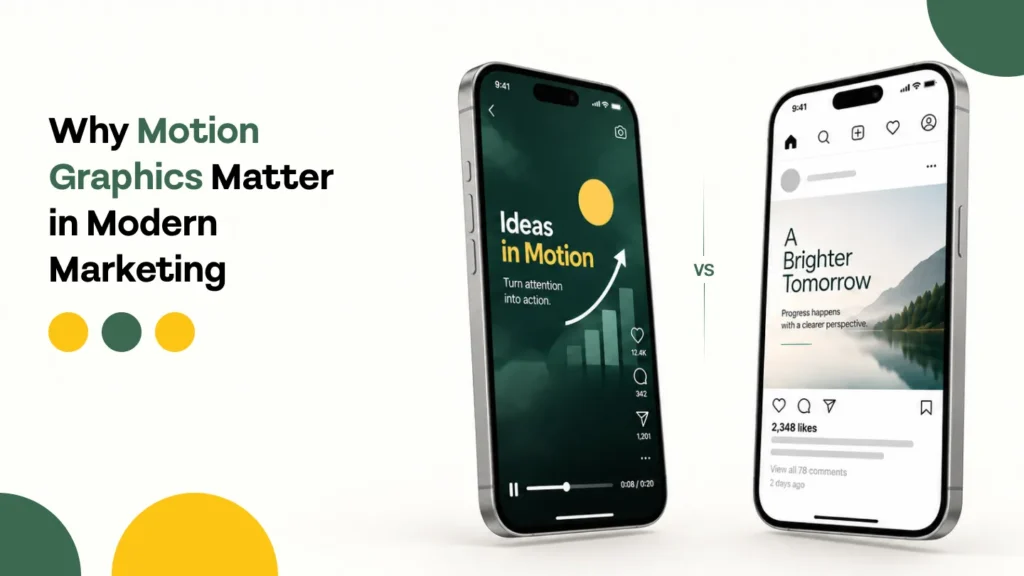
A company may offer good products and services but still find it hard to explain their value. This is common in B2B industries such as manufacturing, engineering, pharmaceuticals, and industrial technology. Their products often involve technical details that need more than a short description.
Motion graphics offer another way to explain these ideas. They combine text, shapes, icons, and images with movement. A video can show how a machine works, explain a process, or highlight key product features.
For B2B companies, motion graphics can support product communication, sales presentations, and marketing campaigns. They can also help teams present information in a clear and consistent way.
The key is to use movement where it adds value. Every animation should help the audience understand the message.
What Are Motion Graphics?
Motion graphics use moving text, shapes, icons, charts, and images to share ideas. They help people understand information through simple visuals.
Motion graphics often explain a product, show how a process works, or guide viewers through key points. Animation is a wider term. It also includes moving characters and stories. You can use both styles in the same video.
Common types include:
- Animated typography: Moving text used to emphasize a message, introduce a topic, or present key information
- Infographic animation: Animated charts, diagrams, and numbers that help explain data or processes.
- Logo animation: Movement applied to a logo or brand symbol for use in videos, presentations, and digital content.
- Product graphics: Labels, callouts, and diagrams that show product features and how parts work.
- Interface animation: Moving icons, screen changes, and other effects used in websites, apps, and product demos.
Each format serves a different purpose. A business may use animated charts to show its results. A factory may use motion graphics to explain how its production process works.
Choose the format based on what you need to explain. Motion graphics work best when movement helps people understand a process, a change, or how things connect.
How Motion Graphics Enhance Brand Communication
B2B companies often need to explain complex products, services, and processes. Motion graphics help them share this information clearly. They also help companies keep their brand style consistent and support their sales teams.
They Make Complex Messages Easier to Follow
Long text and static images may not explain a technical process well. Motion graphics use diagrams, labels, and movement to show how things work.
For example, a machine manufacturer can use an animated video to show each machine part and explain its function. Viewers can see how the parts work together without reading long explanations.
Companies can also use animated diagrams to explain technical data step by step. This helps viewers follow each stage and understand the full process.
Pharmaceutical, engineering, and manufacturing companies must keep this information accurate. Qualified experts should check all technical and scientific details before publication.
They Build a Consistent Brand Style
A brand is more than its logo and colours. The way its visuals move and appear on screen can also shape its identity.
Companies can use the same fonts, icons, colours, and transitions across product videos, presentations, and campaigns. This helps people recognise the brand across different platforms.
For example, a technology company can use the same visual style in software demos, product videos, and sales presentations. The content may change, but the brand style stays familiar.
Simple, consistent movement often works better than complex effects that distract from the message.
They Support Sales Teams
Sales teams often explain the same product features to different customers. Motion graphics give them visuals they can reuse in presentations, product demos, and follow-up material.
A short animation can show how a component works or explain a process. Sales teams can use it whenever they need it instead of creating new visuals for every meeting.
These visuals support sales conversations. They do not replace detailed discussions or live demos.
Companies can also adapt motion graphics for different markets. They can change the language and examples for local audiences while keeping the same brand style.
They Explain Products That Are Hard to Show
Some products are difficult to explain through regular videos. Their internal parts may be hidden, too small to see, or part of a larger industrial system.
Motion graphics use labels and diagrams to show product features. For a closer look at a product’s structure, 3D product visualization or product animation may work better. Companies can then use motion graphics to explain specific parts or processes.
How Motion Graphics Strengthen Brand Identity
Motion graphics for branding should follow the brand’s existing style, not create a separate one. The goal is to keep the brand consistent across different formats.
Animated Logos and Brand Elements
Logo animation can introduce a corporate video, end a product explainer, or identify a brand in a presentation.
The movement should suit the brand and the content. A technical company may use a simple animation, while a consumer brand may choose a different style.
The logo should remain easy to recognize, and the animation should not distract from the main message.
Consistent Typography and Transitions
Typography, colors, graphic shapes and transitions can be developed into a repeatable motion style.
Using the same fonts and graphic styles across product videos, event screens, and digital campaigns helps create a connected brand experience.
This becomes especially useful when several teams or external partners produce content for the same brand.
A Defined Motion Language
A motion language sets rules for how visual elements behave. It can define how titles enter the frame, how diagrams are revealed, how transitions work, and how information is emphasized.
The approach should reflect the brand rather than follow a fixed formula.
An engineering company may prefer precise, structured movement that supports technical explanations. A pharmaceutical brand might use a more restrained style suited to scientific information and product education.
These are creative decisions based on the audience and message, not rules that every company in an industry must follow.
Consistency Across Teams and Formats
A clear motion style helps different teams create content that looks connected. Marketing, product, and sales teams can follow the same design rules across their materials.
This is how motion graphics for brands help. They carry the brand’s visual identity across videos, presentations, digital content, and campaigns
Where to Use Motion Graphics in B2B Marketing
Motion graphics in marketing can support different stages of product communication. Their role depends on the audience, the channel, and the information being presented.
| Channel | How motion graphics can help |
|---|---|
| Website | Explain processes, introduce services, and support product pages |
| Product pages | Highlight features and show how components work |
| Social media | Present product updates, campaign messages, and short explainerss |
| Sales presentations | Illustrate technical processes, data, and product functions |
| Email campaigns | Share short videos or link to relevant product explanations |
| Trade shows and exhibitions | Present product information on display screens and event visuals |
| Corporate videos | Add titles, labels, diagrams, and animated transitions |
| Training material | Explain procedures, workflows, and product information |
| Product launches | Introduce features and present product details in stages |
| Digital advertising | Communicate a focused message through short animated creatives |
The same asset may need different versions for different channels.
A presentation can accommodate a longer explanation, while a social media video may need to communicate its central point more quickly. Exhibition content may also need to work without sound, depending on the viewing environment.
Planning these requirements before production helps ensure that the motion graphics serve their intended purpose.
How Different B2B Industries Can Use Motion Graphics
B2B companies can use motion graphics to explain products, processes, and services in a simple way. Each industry can use them to meet its specific needs.
Manufacturing and Industrial Companies
Manufacturers can use motion graphics to show product features, assembly steps, and how machines work.
For example, animated labels can point out machine parts in a factory video. A short animation can also show each stage of production. For complex machines, companies can combine motion graphics with 3D animation to show internal parts.
Pharmaceutical and Biopharma Companies
Pharma companies can use motion graphics to explain how they make products and how medical technology works.
Animated visuals can show each step of a process. Companies must keep all medical and scientific details accurate.
Engineering and Technology Companies
These companies can use motion graphics to show how machines, software, and systems work.
For example, an automation company can show how sensors and software control a machine. This helps viewers understand the process without a live demo.
B2B Service Companies
B2B service companies can use motion graphics to explain their services and show how a project works.
An animated diagram can break a process into simple steps. Sales teams can also use these videos in presentations and proposals to explain their services clearly and consistently.
Motion Graphics vs Traditional Video and Static Design
| Communication requirement | Motion graphics | Static design | Live-action video |
|---|---|---|---|
| Explaining a sequence | Useful for showing stages in order | Works for simple processes | Useful when the process can be filmed |
| Presenting data and diagrams | Can reveal information gradually | Suitable for quick reference | Often needs graphic overlays |
| Showing real people and facilities | Requires footage or illustration | Photography can work well | Best suited to real environments |
| Explaining technical relationships | Can connect components visually | Depends on diagram clarity | Depends on footage and supporting graphics |
| Showing real product operation | Possible through animation | Limited | Useful when filming is practical |
| Maintaining a visual identity | Can follow defined motion rules | Can follow brand guidelines | Requires consistent production and editing |
The formats can also work together.
A corporate film might use live footage to introduce a manufacturing facility, motion graphics to identify the production stages, and 3D animation to explain a machine’s internal mechanism.
The choice should follow the communication objective. Adding motion to a message that is already clear will not necessarily make it more useful.
What Makes Branded Motion Graphics Effective?
Branded motion graphics need a clear purpose, an appropriate visual style, and accurate information. The following considerations help keep the work focused.
Start With the Communication Objective
Before choosing an animation style, decide what the viewer needs to understand. The objective might be to explain a product feature, communicate a process, or introduce a new service.
This decision shapes the script, visuals, and pace of the animation.
Follow the Existing Brand Identity
Use the brand’s existing colors, fonts, and design style. Keep them consistent across all motion graphics unless the brand plans to change its look.
Match Movement to the Message
Movement should help explain, emphasize, or connect information. Excessive transitions, decorative effects, and unnecessary movement can distract from the main point.
Keep the Information Accurate
Product names, technical labels, specifications, and claims must be checked before the content is approved. This is especially important for industrial and pharmaceutical communication.
Plan for the Intended Channel
Consider screen size, aspect ratio, playback environment, audio, and viewing time before production. These factors affect how the content should be designed and edited.
Build for Reuse Where Practical
Reusable graphic elements and defined motion rules can help future assets remain consistent. Where appropriate, the project can also include different versions for presentations, websites, social media, and exhibitions.
When Should a Business Invest in Motion Graphics Services?
Motion graphics services help you explain better than a still image or regular video.
They may be useful when:
- A product or service is difficult to explain through static visuals.
- The company needs to communicate a process in clear stages.
- Technical presentations rely heavily on diagrams or specifications.
- Product features need to be highlighted in a consistent format.
- Marketing teams need several versions of related content.
- A product launch requires coordinated visual assets.
- Sales teams need reusable explanations for presentations.
- A website or exhibition would benefit from animated product information.
You may not need motion graphics if a simple image or real video explains it better.
The decision should be based on the communication task rather than the popularity of the format.
How to Choose the Right Motion Graphics Services for Your Brand
Choosing a motion graphics agency takes more than looking at its videos. The team should understand your business, your audience, and what you want to say.
Check if they understand your needs. The agency should ask about your business, products, audience, and goals before it starts work.
Look at their past work. Find videos that match your needs. If you want to explain a product, look for work that shows how a product works. Fancy visuals alone are not enough.
Ask how they work. Find out how they plan the video, write the script, design the scenes, add movement and sound, and make changes.
Check if they can match your brand. The agency should use your brand’s colors, fonts, and style in the video.
Agree on what you will get. Decide the video length, size, language, number of changes, and file type before work starts.
At Eilan Digital, we create motion graphics for explainer videos, infographics, events, icons, apps, and title screens. These videos can help you explain a process, show a product, or promote your brand at events.
Eilan also offers branding and design, 3D product visualisation and other visual services, You can use these services with motion graphics when your project needs them.
How Motion Graphics Help Your Brand
Motion graphics help B2B companies explain their products, share ideas, and show how things work. They can make hard topics easier to understand and help teams share the same message across different channels.
Start with a clear message. Use animation to explain a product feature or show each step of a process. Keep the same style across your videos so people can link them to your brand.
Factories, engineering firms, pharma companies, and tech businesses can all use motion graphics to explain their work.
At Eilan Digital, we create motion graphics based on your message, audience, and goals. Need to explain a product or show how a process works? Explore our motion graphics services and tell us what you need.
FAQs
Motion graphics are animated visuals, such as text, icons, charts, and illustrations, used to explain ideas or share information.
They make information easier to understand and help brands maintain a consistent look across videos, presentations, and campaigns.
They help B2B companies explain technical products, services, and processes in a clear and engaging way.
Using consistent colours, fonts, transitions, and graphic elements helps make animated content recognisable as part of a brand.
Motion graphics focus on moving text, shapes, icons, and other graphic elements. Animation is a broader term that also includes characters, 3D scenes, and storytelling.
Previous
Let’s talk about what
you’re building.
Whether you’re refining a brand, preparing a market launch,
or bringing clarity to a complex product, we help translate
intent into structured, effective execution.