
3D Product Rendering Benefits, Process and Business Applications
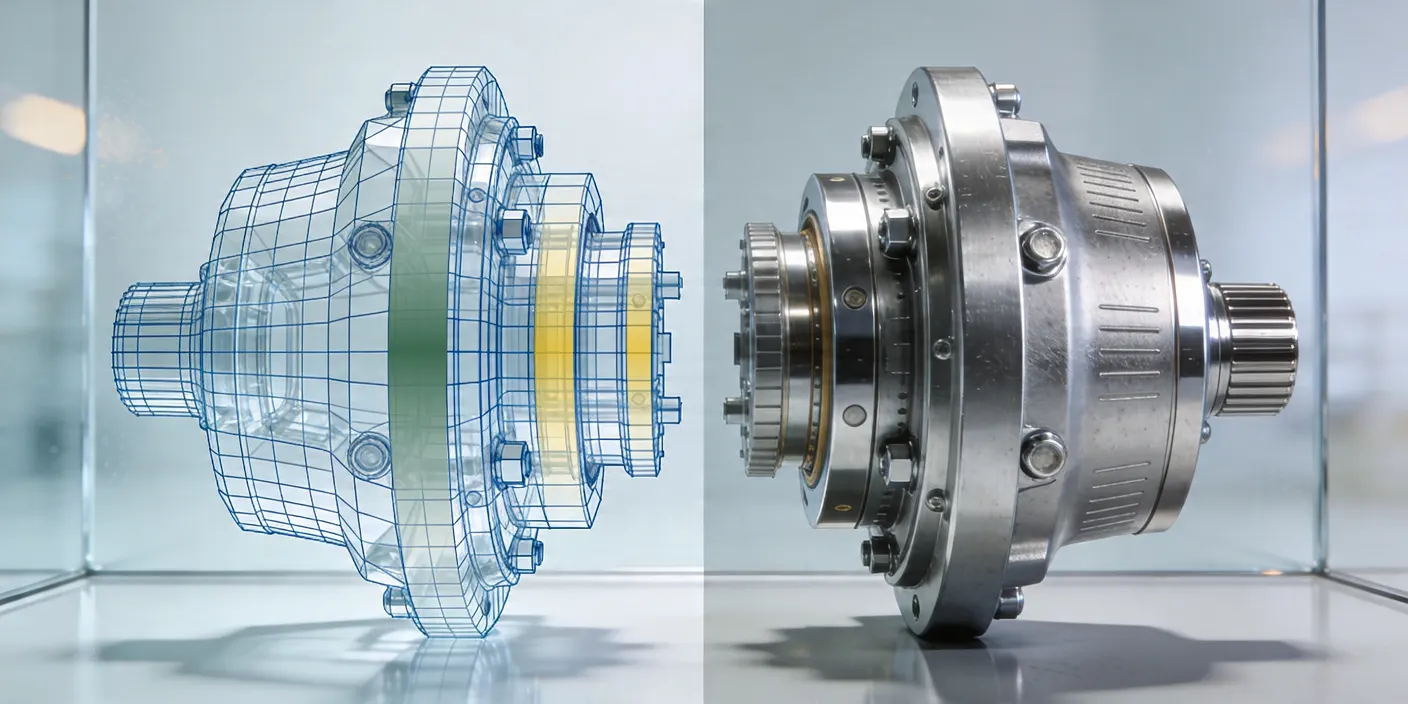
Here is a situation we see more often than you would think.
A manufacturer needs to pitch a new machine to a client. The product is still three months from rolling off the line. What do they show in the meeting? A PDF with technical drawings and a paragraph of specifications. The client nods along, takes the brochure, and says they will think about it.
Meanwhile, a competitor walks in with a photorealistic 3D render. The client can see the machine from every angle. They can see how the internal assembly fits together. They can see the product in their facility. That competitor closes the deal before the machine exists physically.
That is not a hypothetical. That is what 3D product rendering does in practice, and the gap it creates is wider than most businesses realise until they see it firsthand.
On the ecommerce side, the story is different, but the logic is the same. A furniture brand has a sofa in eight fabric options across three frame sizes. That is twenty-four combinations. A traditional photo shoot for all of them costs a serious amount of money, takes weeks to organise, and becomes outdated the moment a new colour is added to the range. One 3D model generates all twenty-four. Add a colour next season, and it costs a fraction of a reshoot.
The benefits of 3D product rendering are not theoretical. They show up in budgets, timelines, and sales numbers.
What 3D Product Rendering Actually Delivers
There is a reason businesses that switch to 3D rendering rarely go back. Shopify’s data on 3D content performance shows that adding 3D content to a product page lifts conversion rates by 94% and cuts product returns by 40% on average. When a 3D asset is present, 82% of viewers actively interact with it rather than passively scanning past it.
Source: Shopify / CGI Backgrounds 2025 |
Those numbers reflect one thing: when buyers can actually see what they are buying, they buy more confidently and return less. That is true whether the buyer is a procurement manager evaluating an industrial machine or a consumer deciding between two sofa colours on their phone at midnight.
What 3D Product Rendering Actually Is
It is not photography. It is not an illustration. It is a process where a product is built as a precise digital model, materials and lighting are applied in software, and a rendering engine calculates how light behaves across every surface to produce an image that looks like it was taken in a studio.
The output is indistinguishable from photography to most viewers. But unlike a photograph, it was produced without the product needing to exist, without a studio, and without a photographer. Change the colour, change the background, change the angle. None of that requires a reshoot. It is just a software update.
And the model does not stop being useful after the first set of images. The same asset that produces your catalog render can power a 3D product configurator where buyers configure options in real time, an animated product demonstration, an augmented reality experience, or technical documentation. You are not buying a set of images. You are building a commercial asset that keeps working.
A photograph is a deliverable. A 3D model is a production system. Every new campaign, every new variant, every new application draws from the same asset.
3D Product Rendering Benefits for Manufacturing Businesses
If you build complex products, you already know the problem. Your buyers need to understand what they are buying before they commit, but getting a physical product in front of them costs time and money you may not have. And photographing every configuration of a machine with twenty accessory options is not a realistic proposition. That is where 3D product rendering earns its place.
You Can Sell a Product That Does Not Exist Yet
This is the one that changes timelines. Once the 3D model is built, marketing does not have to wait for manufacturing to finish. Your sales team can walk into meetings with photorealistic visuals, your website can go live with the product page, and your distributor network can start generating interest, all before a single unit has been produced. Our piece on how 3D visualisation enhances manufacturing efficiency gets into the operational side of this in more detail. The short version is that it compresses the gap between engineering and revenue.
Complex Products Finally Make Sense to Buyers
A machine with twenty components, three modes of operation, and a specific installation footprint is almost impossible to communicate through words and diagrams alone. Most sales reps end up spending the first half of every meeting just explaining what the product does rather than selling it.
3D rendering fixes this. Exploded views that reveal internal assemblies. Cross-sections that show how components interact. Animated walkthroughs that show the mechanism operating in real time. Buyers stop guessing and start evaluating. That is a completely different sales conversation.
Fewer Surprises at Delivery
When a buyer has seen a photorealistic render built from the same technical data as the manufacturing files, there is very little gap between what they ordered and what they expected. The specification errors, the “that is not what I thought it looked like” conversations, the costly rework requests. These drop. Not because the product changed, but because the buyer understood it properly before they committed.
Your Sales Team Has Visuals for Everything
A salesperson who can show accurate, high-quality visuals of every product variant in a meeting, without waiting for assets to be produced, has a significant advantage over one who cannot. 3D rendering gives your entire team that coverage. Every configuration, every accessory option, every finish. Ready when they need it.
Where manufacturing businesses see the clearest return
- Pre-launch product campaigns while the product is still in engineering
- Sales tools that explain complex products visually without a sales engineer in the room
- Full variant coverage across all configurations without physical samples
- Design validation renders before expensive tooling decisions are made
- Distributor and trade show assets that do not require shipping a prototype
3D Product Rendering Benefits for Ecommerce Businesses
The ecommerce problem is not complexity. It is scale and consistency. You have products in multiple colours, sizes, and materials. You need every combination imaged at a professional standard, from consistent angles, ready for every channel. And every time something changes, you are back at the start. 3D product rendering fixes the economics of that problem.
One Model, Every Variant
This is the most immediately obvious benefit and it compounds fast. Build the 3D model once. Apply every colour, every material, every size digitally. Generate every combination at consistent quality without a single additional shoot. When a new option gets added to the range next season, it costs a fraction of starting over. The math changes completely once you are managing more than a handful of SKUs.
Consistency That Photography Cannot Deliver at Scale
Anyone who has managed a large product catalog knows what happens when images are shot across multiple sessions, photographers, and lighting setups. You end up with a catalog that looks like it belongs to five different brands. Colours are slightly off. Angles do not match. Shadow directions conflict. 3D rendering produces every image under identical conditions. As we explored in our comparison of 3D visualization vs traditional photography for visual consistency, this matters far more to conversion than most ecommerce teams account for.
Your Product Page Is Live Before the Stock Arrives
If you pre-sell, dropship, or work with long supply chains, the gap between “we have confirmed the product” and “we have images to go live with” is a real business problem. 3D rendering closes it. You build the model while the product is in production. Your product page goes live with full visual coverage before the warehouse receives a single unit. That is weeks of selling time recovered on every launch.
Campaign Variations Without Campaign Budgets
A lifestyle shoot for a seasonal campaign requires a location, props, models, and half a day of production time. Do that four times a year across a range of products, and the costs add up fast. With a 3D model, a summer garden scene, a winter kitchen, a minimalist studio shot, and a campaign hero visual, all come from the same asset. What used to be a production decision becomes a creative one.
The Conversion and Returns Numbers Are Real
The 94% conversion lift and 40% return reduction from Shopify’s 3D content data are not averages from a niche category. They reflect a straightforward dynamic. When buyers can see a product properly, from every angle, in every colour, in realistic context, they make better decisions. Better decisions mean fewer returns. Fewer returns mean better margins. It is not complicated.
Where ecommerce businesses see the clearest return
- Full variant coverage from a single 3D model, no reshoots when options change
- Visual consistency across hundreds of SKUs that photography cannot maintain
- Product pages live before stock arrives for pre-sell and dropship models
- Seasonal campaign variations without location or studio costs
- 94% higher conversion and 40% fewer returns with 3D product content on the page
The 3D Product Rendering Benefits Both Industries
This is the one that most businesses underestimate when they first start the conversation.
A photography session produces images. When those images are outdated, you book another session. The value does not carry forward.
A 3D model produces images and then keeps producing. The same model that generates your catalog renders today can become a real-time configurator next quarter, an animated demonstration for a trade show the quarter after, and an AR experience when your platform supports it. Each new application costs a fraction of what rebuilding from scratch would.
It is the difference between spending on content and investing in infrastructure. The businesses that understand this stop thinking about 3D product rendering as a production cost and start thinking about it as the foundation of their entire visual strategy.
Photography gives you images. A 3D model gives you a production system that gets cheaper to operate every time you use it.
When Does 3D Product Rendering Actually Make Sense?
Not every product needs 3D rendering. Here is an honest read of when it makes sense and when it does not.
It makes sense when:
- Your product has more than three or four variants that would each need a separate shoot
- You need visuals before the product is ready to photograph
- Buyers need to understand internal components or mechanisms before committing
- You are managing a catalog where visual consistency is slipping
- You want the same asset to work across renders, a configurator, animation, and AR
- Your campaign frequency has outgrown your photography budget
It probably does not make sense when:
- You have a single product, one variant, and a stable specification
- Organic texture, drape, or freshness is the product, like food, handmade ceramics, or garments, where the physical material is the thing being sold
- You need human presence and an authentic context that only a real shoot provides
Most businesses land somewhere in between. The practical answer is usually to use rendering for catalog coverage and variant management, and photography for hero lifestyle content where authenticity matters. The two approaches are not mutually exclusive.
See What 3D Product Rendering Looks Like for Your Business
Our 3D product visualization services span industrial equipment, automotive, and product visualization across consumer and commercial categories. We do the full pipeline in-house: modeling, texturing, lighting, rendering, post-processing, and delivery for web, print, and interactive formats.
Every model we build is built to last beyond the first brief. We are thinking about whether this asset can drive a configurator, support an animation, or adapt for AR before we start modeling. That is not an upsell. It is how you avoid paying to rebuild something from scratch six months later.
We start every project by asking what the render needs to do commercially, not just visually. Who is looking at it? What decision it need to be supported? What the viewer needs to understand or feel before they take the next step. The visual follows from that. Not the other way around.
If you want to see what this looks like for your specific product, get in touch. We will walk you through the process, what we would need from you, and what the output realistically looks like for your catalog or product line.
To Wrap Up
The benefits of 3D product rendering are not the same for everyone, but they follow a consistent logic. For manufacturers: sell earlier, explain better, close faster. For ecommerce businesses: cover more variants, maintain better consistency, convert more buyers, and lose fewer to returns.
In both cases, the 3D model built today becomes the foundation for everything visual that comes after it. That is the real argument for doing it properly from the start, with a partner who is thinking about what the asset needs to do, not just today, but six months from now.
Frequenctly Asked Question
You can produce visuals before the product exists, generate every variant from one model, maintain perfect consistency across your catalog, and repurpose the same 3D asset for configurators, animations, and AR without starting over. The upfront investment pays back faster than most people expect.
Manufacturers use it to sell products that are still on the drawing board, explain complex assemblies to buyers who need to see before they commit, and arm sales teams with visuals for every configuration without waiting for a physical sample. It compresses the gap between engineering and revenue.
You stop paying for reshoots every time a colour changes. One 3D model covers every variant. Shopify data shows a 94% lift in conversion and 40% fewer returns when 3D content is on a product page. That is not a marginal improvement. That is a structural one.
For a single product with one variant, costs are comparable. Once you have multiple colours, sizes, or configurations, the equation changes fast. Photography scales linearly with every new option. A 3D model does not. At catalog scale the savings are significant.
Yes, and that is the point. The model that produces your product images can also drive a real-time configurator, an AR experience, a trade show animation, and your technical documentation. You build it once and it works across everything.
Previous
Let’s talk about what
you’re building.
Whether you’re refining a brand, preparing a market launch,
or bringing clarity to a complex product, we help translate
intent into structured, effective execution.